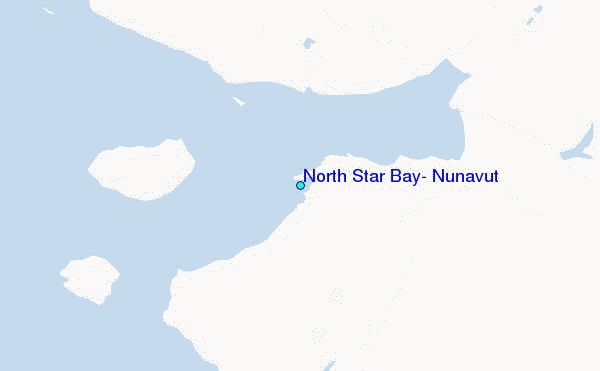
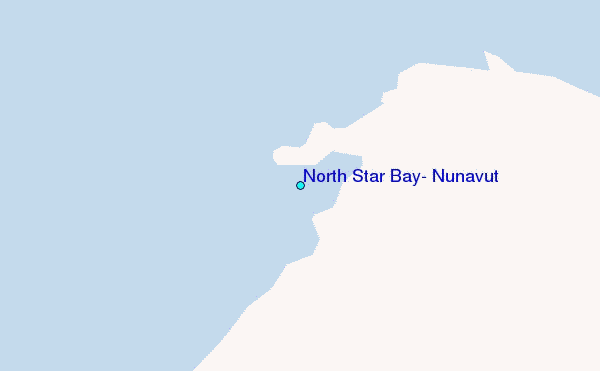
North Star Bay (Danish: North Star Bugt), also known as Thule Harbor and Wolstenholme Bay, is at the mouth of Wolstenholme Fjord in north-west Greenland. It is named after HMS North Star.
There are two large islands off the bay, Saunders Island and Wolstenholme Island. Bylot Sound is the strait to the south, between the islands and the mainland. The Inuit settlements of Narsaarsuk and Pituffik were on the shore of the bay, but have been abandoned. The United States' Pituffik Space Base is now the only inhabited place on the bay.
History
HMS North Star under Commander James Saunders sailed to the Arctic in spring 1849 on an expedition to search for and resupply Captain Sir James Clark Ross' venture, who itself had sailed in 1848 trying to locate the whereabouts of Sir John Franklin's expedition. Failing to find Franklin or Ross, Saunders' mission aboard North Star consisted of depositing stores along several named areas of the Canadian Arctic coast and returning to England before the onset of winter. However, the ship's progress northwards was hindered by ice in Melville Bay and it became trapped by ice off the coast in North Star Bay. A paper left by Saunders in a cairn reads:
This paper is placed here to certify, that H.M.S, North Star was beset, at the east side of Melville Bay, on the 29th of July, last year, and gradually drifted from day to day, until, on the 26th of September, we found ourselves abreast of Wolstenholme Island; when perceiving the ice a little; more loose, and the Sound perfectly clear, we made all plain sail, and pressed her through it, anchoring in the lower part of the Sound that evening, and arrived in the Bay on the 1st of October, where she remained throughout the winter.
Saunders named numerous landmarks in the area while wintering in the frozen bay in 1849–50.
The bay was the site of a Cold War nuclear accident when a B-52 bomber carrying four thermonuclear bombs crashed, spreading contaminated material over the area.
Images
References